
Framework for readings on the book of Genesis (“Origin”)
Personal Context
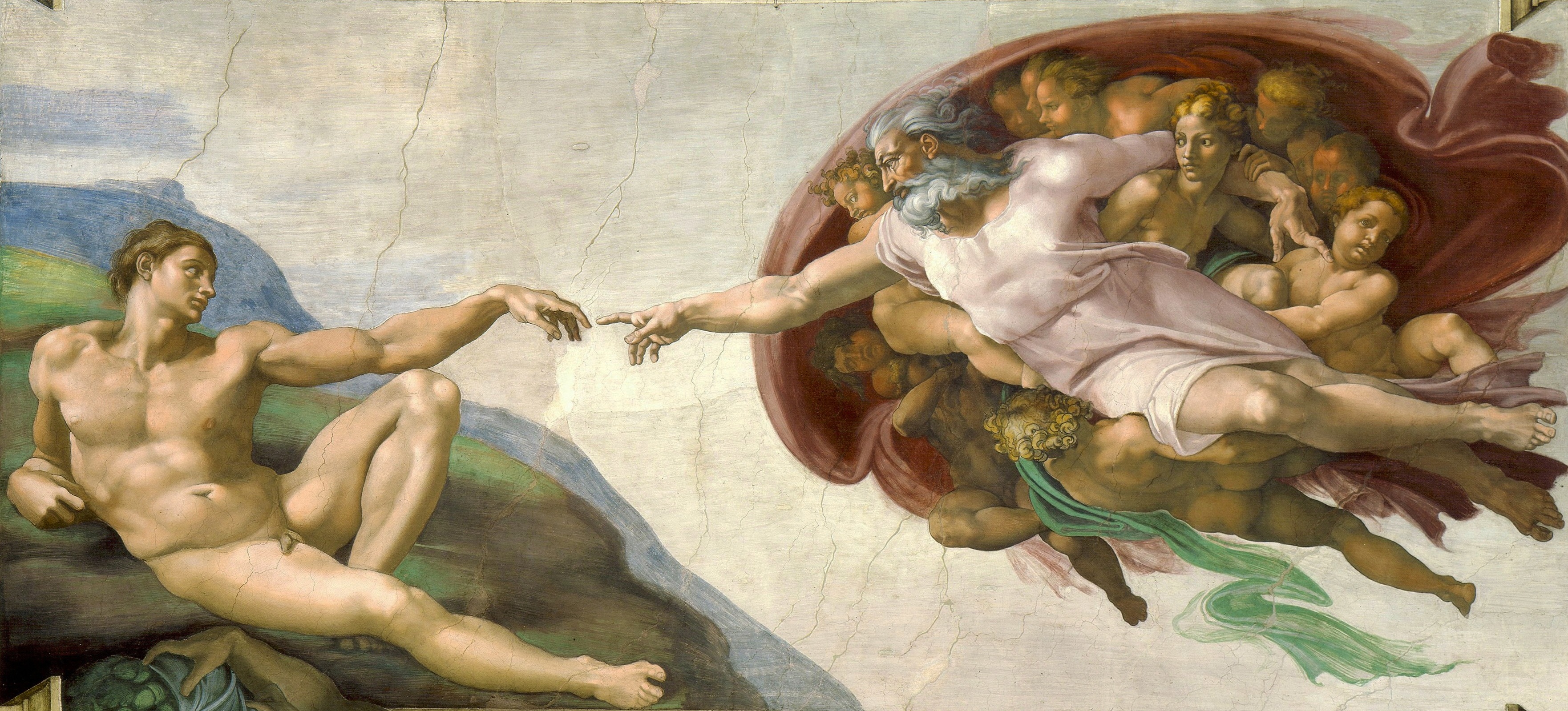
The book of Genesis has laid the foundation for many of Christian doctrines of original sin, the fall, total depravity, troubled relationships between genders, siblings, and people, grace, the covenant, promised land, etc. If it wasn’t for the book of Genesis and the story of Eve (not so much Adam), we would not be in need of Christ and his redemption. So should we be thankful or be upset with Eve? Eve, after all is the essential part of the plan within the overarching Christian plan for the Christ-figure! But is Eve really a pivotal character or just one in a series of flawed antedeluvian figures?
Then we are introduced to our models of the faithful patriarchs, Abraham, Isaac, Jacob, and Joseph, who upon careful reading is far from perfect, far from faithful. And yet they are our patriarchs, the ones we are encouraged to emulate. But what about their lies and acts of deceit? I never really knew what to make of these stories, of their blatant moral failures especially since my pastors never really gave any context to understand them or how to read them. Yet the stories in the book of Genesis is why I became interested in the Hebrew Bible and why I spent most of my adult life studying it.
One could probably spend a year just studying the book of Genesis because of the richness of the narrative and the underlying theological implications and their misapplications in religious circles. It is a minefield and also a cache of treasures if read with a critical mind and an open heart to new readings/interpretations.
Historical Background
Most scholars date the compilation of stories in the book of Genesis to be around 5th/4th century BCE. The individual stories are probably older but their meaning is given shape within the structure of the overall book of Genesis and the Hebrew Bible in general. What does this mean? The original intent and meaning of the individual stories change in how they are presented in Israel’s self understanding within the framework of the Hebrew Bible and the Christian Bible. It is not static – it changes with the context of the text and the context of the reader. While ever-changing, one can assess the approximate intent of the final editor(s) of the Hebrew Bible. It may not get to the truth but may rule out some interpretations that are more reader-based rather than the writer/editor-based.
What do we know about the 5th/4th century BCE of Israelite history? Israel faced its initial series of invasion, deportation, and oppression under the imperial powers:
- Assyrian (733-600 BCE)
- Babylonian (586-539 BCE)
- Persian (539-332 BCE)
- Hellenistic Greek (332-167 BCE)
- Hasmonean (167-63 BCE)
- Roman (63 BCE – 313 CE)
- Byzantine (313-614)
- Sassanian (614-628)
- Muslim/Arab (638-1099)
- Crusader (1099-1291)
- Mamluk (1291-1517)
- Ottoman (1517-1917)
- British (1917-1948)
After a short-lived period of political independence under the Davidic kings in united Israel (1000-720 BCE) and then the southern branch, Judah (1000-586 BCE), the Israelites constantly faced the threat of more powerful, dominant neighboring empires, Assyria, Babylonia, and Persia. While not even close to their size and power, the small kingdom of united Israel and then Judah prided themselves on their independence. And within circles of the religious groups, this independence was the hallmark of Israel’s chosen status under their patron deity, Yahweh.
Literary Background
The main literary sources who may have contributed to the writing of the book of Genesis, based on scholarly reconstruction of Israelite history, are the following:
- Jahwist (J)
- Elohist (maybe pre-Deuteronomistic group) (E)
- Deuteronomistic (D)
- Priestly (P)
While scholars attribute the composition of the Hebrew Bible to these four sources (JEDP) within the first five books of the Bible, the Pentateuch (Genesis, Exodus, Leviticus, Numbers, Deuteronomy), the distinct vocabulary, literary style, themes, and theological worldview reflect schools behind these sources within Israel. It is difficult to pinpoint the actual groups but by the first century, extra biblical texts mention the main sects within Judaism: the Pharisees, Sadducees, Essenes, and Zealots. Whether there is continuity between the ancient hypothetical, scholarly reconstruction of sources and some of the sects is not clear. But it is evident that distinct authorial voices and therefore perspective are present in the Hebrew Bible, especially between the Deuteronomistic and Priestly sources. At the same time, we cannot assume a monolithic worldview within these sources which may span hundreds of years. Like the current political parties, the Democratic and Republican parties in the USA, the D and P schools change amidst the fluctuating religion-political and cultural background. Yet there is continuity, or efforts to claim and maintain ties to the earlier traditions through adherence to certain rituals, worldview, values, and vocabulary, within the discontinuity.
I might mention that the JEDP authorship and therefore the concept of different schools is not fact; it is a scholarly hypothesis, based on close examination of the texts. We do not have undeniable proof that these specific sources run throughout the Pentateuch; nevertheless this hypothesis explains many of the repetitions, contradictions, and differences in names for God. Even if one does not prescribe to the JEPD authorship of the book of Genesis, one cannot dismiss the distinct perspectives and therefore voices that prevail throughout and beyond the first book of the Bible. Adhering to multiple authorship of the Bible allow students to understand and appreciate the ancient Israelite tradition which is continued within Judaism which is the awareness of the inclusion of the diversity of voices, even conflicting and contradictory perspectives to reflect the Israelite experience. Their God or their experience of God cannot be boxed within one view but it is within the multiplicity that one gets a glimpse of this God.
Literary and Thematic Structure/Framework
The book of Genesis opens the Hebrew Bible, expanding from the creation of the world (Gen 1:1) to the burial of Joseph in Egypt (Gen 50:26). It beautifully and masterfully links the creator God to Abraham, the patriarch of the Israelites, and his descendants. Through genealogies of nations interlaced between short stories of the antediluvian (pre-flood) people and Israel’s patriarchs and matriarchs, we are funneled into the history of a burgeoning kingdom. While Israel’s beginnings is meek, initially consisting of Terah and his three sons, the small family grows into a people, a nation in Egypt:
- Terah – Abram (Abraham), Nahor, and Haran
- Abraham and Sarah and Hagar – Isaac and Ishmael
- Isaac and Rebekah – Jacob and Esau
- Jacob and Leah/Zilpah/Rachel/Bilhah – 12 tribes and Dinah
- Joseph and Asenath – Ephraim and Manasseh

This is not actual history; this is the rhetorical power of storytelling. All the nations, great and small, may have descended from Noah and his family but the promise is through Abraham and his select descendants. We are seeing the world through Israel’s self-understanding as the creator God’s elect people. So one can ask, why do the editor(s) start the story with creation and not Terah? What would have been the motivation to develop a close relationship between the God of all nations to Abraham, who appears to have worshipped the god of the fathers? It asserts the special relationship between a universal God and the Judeans who have been waiting for their restoration in Jerusalem. This is the hope that the Judeans hold under an oppressive imperial power, the redemption of its people.
Within the broad strokes of the birth of nations, we are given access to the authors/editors’ view of humanity. While all of creation is good, humans struggle to make right decisions. The reason why we are still not in Eden is because Adam and Eve chose to disobey; why brothers cannot live in peace is because of jealousy that resulted in bloodshed; why all people and creatures, except the ones sequestered in Noah’s ark, were destroyed in a flood is because of human’s proclivity for wickedness; why humans don’t live for hundreds and hundreds of years is because we are evil; why we have so many languages and cannot understand each other is because we tried to reach God; and why the patriarchs find themselves in dire situations is because they are always trying to save their hide rather than trust God. God is always having to reconcile the reality of humanity’s nature by adjusting and adapting, i.e. making concessions while radically changing the quality of people’s lives for the worse, except when we get to the patriarchs and matriarchs:
- Enmity between snake and women
- Childbearing pain for women and male domination
- Unyielding ground for men
- Cain – fugitive and wanderer
- Shorter lifespan to 120 years (sons of God mixing with daughters of men)
- Flood to wipe out humanity and creatures
- Eat animals without the blood
- Canaan (descendant of Ham) cursed – slave
- Different languages and scattered
We are living in a world that was not part of the original divine design. We have fallen because of the choices that humans make are less than ideal. But we are not totally depraved. This verse sums up the Priestly understanding of people:
Never again will I curse the ground because of humans, even though every inclination (yetzer) of the human heart is evil from childhood. (Genesis 8:21)
People can choose evil or good but their nature is to choose evil (יֵצֶר הַרַע); in other words, people themselves are not evil or demonic but they have a tendency to do wrong. While humanity are flawed because of their choices, God continues to show up with covenants:
- Rainbow – promise to Noah never to destroy earth with a global flood
- Circumcision – covenant between God and Abraham and his descendants
The covenant of the rainbow is that God will never destroy all of humanity with a flood, no matter what we do. The covenant of the circumcision is the promise of land and many descendants to Abraham and his descendants. Noah and the patriarchs and matriarchs are less than ideal but God fulfills the divine promises in spite of their flaws. And the divine promise does not happen overnight or easily. Sarah is barren; Rebekah is barren; and Rachel is barren. God forbid that the patriarchs be infertile. Will the promise of numerous descendants and land ever happen? And through whom will God keep the promise? The literary suspense is real. We are always on edge because the promise is always on the precipice of being broken but the creator God is luckily for the patriarchs steadfast
All the stories have a prehistory before the final editor puts them together. Sometimes it seems disjointed because the editor is devoted to keeping the stories intact rather than just writing their own version of Israel’s past. But if one reads the story in the backdrop of imperial domination and deportation of its people, the message is clear: You may be small like Terah’s family and it may seem like the divine promise of many descendants and the land filled with milk and honey may never ever happen. But just wait and watch what God will do for you. God, not Asshur or Marduk, who created the world will remember and guarantee the fulfillment of the covenant God made to Abraham and Sarah. It will come to pass. These very promises are what forms the backdrop of the Zionist movement within Jewish and Christian circles to this very day. The question remains whether the promise made to the Israelites during the Persian period is still applicable to this day. This depends on one’s assumption about the Bible.
Themes
- Humanity’s Wickedness
- Covenants
- Promise of Progeny and Land
Questions to Ponder
- What assumptions do you bring to your studies of the Hebrew Bible – name them and see if it is consistent with what is in the text?
- How do your assumptions inform your interpretations?
- If your assumptions were changed, then how would your interpretations change?
Personal Reflections
- What stories do you remember from the book of Genesis?
- What lessons/themes did you learn about the book of Genesis in your childhood?
- How did the short introduction challenge some of your pre-understanding of the stories in the book of Genesis?
- What questions would you like to explore in the book of Genesis?
Final Thoughts
Our assumptions about the Bible, specifically the Hebrew Bible, greatly impacts how we read and interpret the texts. The challenge is to be open to different interpretations by questioning our deeply held assumptions. If the Hebrew Bible is not the word of God and/or should not be interpreted literally, then how do you start to read the text differently? How would the childhood stories of Genesis be different? Did you learn that Eve disobeyed God first and therefore women need to submit to their husbands? What if the story is not prescribing what had happened in history but is actually a description of the people’s experience of the inequity in the relationship between men and women? Or did you learn that Abraham was the friend of God because of his faith? What if Abraham is actually portrayed as a fumbling character and one comes to actually see his slow development as a patriarch? We will test are assumptions; we will challenge our interpretations; and we will explore the beauty of literary brilliance of the ancient authors/editors.
Leave a Reply