
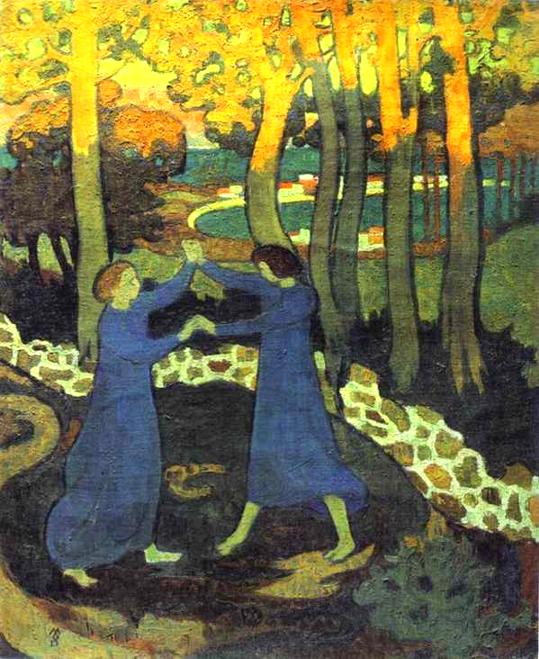
The Birth of a Trickster (Genesis 25:19-34)
General Reflection on the Jacob Cycle (Genesis 25:19-37:2)
My mother’s favorite character in the Bible was secretly Jacob. She would probably tout David or Paul as her most cherished person in the Bible besides Jesus but she could not help but love Jacob’s tenacious focus. He knew what he wanted and he would use any method to achieve his goal. As an ambitious person herself, who did everything under the sun to migrate into the US, many of them questionable, illegal, and even immoral, she saw Jacob’s journey as her own. They were essentially two peas in a pod. Despite their Machiavellian approaches, God chose and loved them. Yet their journeys were not so simple; Jacob and my mother would be the first to tell you that they learned many painful lessons on the way.
Because of my mother’s secret love for Jacob, I had a fondness or perhaps envy for this conniving trickster who seemed to get everything, birthright, blessings, wives, possessions, and of course, the covenant. But unlike Isaac who comes into his blessings without any effort, Jacob had to resort to manipulations and deception to wrest what he wanted, which was not his birthright as the youngest. However, what is ironical is that everything would have been his (based on the divine response). Or did God only foretell what Jacob would do to force his fate through his actions?!
While many biblical commentaries have commented on his trickery, the literary artistry of the Jacob cycle is not in his wit/resourcefulness, but the way in which he transforms into the patriarch. He learns and grows as a character who constantly finds himself in impossible situations because of his and his children’s ambition. Rather than relying on his own resources, he comes into a deep realization of God’s fortuitous intervention. God protected Jacob through all his misadventures.
Personal Reflection on Jacob’s Birth Narrative
When I was conceived, my mother had a dream which she interpreted as a taemong (태몽), a traditional Korean conception dream. Taemong was meaningful because it allowed Korean mothers to know the gender and future personality/destiny of the child. In function, it was similar to doljabi (돌잡이) where a baby on their first birthday was presented with several symbolic objects. Whichever item the baby picked basically foretold their future career. Since my family was poor, we couldn’t really celebrate birthdays, not the expensive, traditional doljabi, but fortunately, a taemong was free.

Well in the taemong, my mother was a contestant in a beauty pageant held at a church, a heavenly bedazzled church with water flowing from the base (?). I can’t remember exactly how she described the church but it was celestial (i.e. not of this world) because God’s throne was within the church. And by a stroke of luck, she won the beauty contest because angels or God had crowned her. Based on this dream, she believed that I would be special, a person who would bring glory to God and of course, our family. This dream was dissimilar to the taemong dreams she had of my siblings. For two of them, she dreamt of abundantly fruited trees and the third sibling, she saw a large, lazy reptilian creature which did not move, even with some prodding. Based on these dreams, she predicted that my siblings would have fruitful lives except for my brother who was, according to her, going to be a very lazy person. Luckily, my siblings weren’t jealous of my dream (unlike Josephs’ brothers) because everyone in my family wanted the quiet life, including myself. My mother was the exception – the more limelight, the better.
Why am I sharing my mother’s taemong? My mother referred to this dream over and over when I struggled to find my place in the world. She used the dream as evidence that I would do great things. She knew that no one stage/phase of life defined a person but that the totality of life with all their vicissitudes spoke to the overall direction of a person’s journey. By pointing to the dream, she believed that my life would reflect a life that would bring joy to God, no matter what one day, month, year, or decade seem to indicate. It was her battlecry for me and assurance for her when she too doubted whether my life would turn out well.
As we come into the birth narrative of Jacob, God’s response to Rebekah’s inquiry is pivotal in how the stories of Jacob unfold in the Bible. According to the author, God declared that the older would serve the younger. A number of questions about fate, foreknowledge, and choice come up. Was God’s response based on foreknowledge of what would happen, i.e. an awareness of the younger’s personality/characteristics? Or did God choose Jacob and therefore it didn’t matter what he did or didn’t do? It was fait accompli. If that is the case, was there a reason as to why God chose Jacob and not Esau? What goes into God selecting the elect? So many questions, so few answers.
When I was young, I thought God selected Jacob for a good reason. I didn’t know what it was but there must have been something about Jacob that made him special – aren’t biblical characters supposed to be extraordinary? All the children’s Bible I read made them into heroes!!! However, as I have aged and started to read the Bible with a little more scrutiny, I wonder if Jacob was special at all. He was such a devious character who got away with too much. So I began to think whether God chose certain people to be elect, not based on any merit but just because. And Jacob was the character who made me question the extraordinariness of biblical characters. Our studies on Jacob’s cycle is distinct from our discussion on Abraham because unlike his grandfather, Jacob was a scoundrel whose redemption took a little more time and a little more challenges in life.
Ancient Context
Like Abraham and Sarah, Isaac and Rebekah struggled to conceive a child. One would think that the struggle was a one-generation problem, not an intergenerational issue. But here is a 40-year old Isaac married to Rebekah, his cousin, with no child in sight. Based on the story, Isaac prayed. Yet one needs to ask a few questions:
- Why so long? Based on the account, Isaac was 60 when he had his twins so did he pray for 20 years before he was able to conceive a child with Rebekah?
- Why now? Or did Isaac all of a sudden decide to pray at the age of 59?
- Why Isaac? Based on Isaac cycle, this patriarch was more passive than any character in the Bible. One would have expected Rebekah to have prayed or demanded that Isaac pray or demand that Isaac impregnate her maidservants. She would not have waited 19 years before demanding some resolution. So what is going on?
- Why difficult pregnancy? Based on the account, she was to have twins, one of whom will rule the other.
- Why elect one child over the other? Based on the development of the story, Jacob will become Israel, the ancestor of a kingdom. But why could Esau not be part of the covenant as well? After all, Esau shared the same mother and father as Jacob.
These questions/issues do not have simple answers. Yet we need to ask, were they just a mystery to us, the modern audience, or were they also perplexing to ancient readers? Because of the canonical status of the Bible in certain religious communities, interpreters were invested in understanding issues that may not have been concerning for the ancient biblical authors.
The Prayer (Genesis 25:21-23)
For 20 years of their marriage, Isaac and Rebekah were without a child. Had it been Sarah, she would have demanded that Isaac have a child through her maidservant. Sarah patiently waited 10 years before she told Abraham to conceive a child through Hagar. One would have expected something very similar from Rebekah, who was not shy about making her wishes known. After all, she is the one who left Paddan Aram the day after Abraham’s servant showed up in her town, asking her to marry Isaac. So what happened in the interim? It is not clear.


This then comes to the next perplexing question, why were the matriarchs, Sarah, Rebekah, and Rachel all barren? The ancient Jewish interpreters asked this very question:
Why were the matriarchs barren? Because God desires the prayers and conversations of the righteous. He said: “They are beautiful, they are rich; if I give them children, when will I ever hear from them?” (Midrash Tanchuma – Toldot 9)
However, most modern commentators view this mystery with a very practical observation. It is a literary tool to create suspense, i.e. to grab the attention of the reader. How else was the poet/author to engage the listener/reader if not for the problem of the infertility? The suspense – will God fulfill the promise made to the patriarchs and if not, what would happen to the covenant!
Aside from God’s desire for prayer, there were other explanations as to why Rebekah was barren:
Rabbi Yehuda said in the name of Rabbi Shimon ben Elazar: Why did Rebecca become barren? It was so the nations of the world would not say: ‘Our prayer produced results,’ as they said to her: “Our sister, may you become thousands and myriads” (Genesis 24:60). This was until Isaac prayed on her behalf, and she was remembered. That is what is written: “Isaac entreated the Lord on behalf of his wife” (Genesis 25:21).
Rabbi Azarya said in the name of Rabbi Ḥanina bar Pappa: Why did the matriarchs become barren? It was so they would not rely on their husbands due to their beauty. Rabbi Huna and Rabbi Yirmeya said in the name of Rabbi Ḥiyya bar Abba: Why did the matriarchs become barren? It was so most of the years would elapse without enslavement. Rabbi Ḥoni [said] in the name of Rabbi Meir: Why did the matriarchs become barren? It was so their husbands would enjoy their beauty, for when a woman becomes pregnant, she becomes ugly and revolting. Know that it is so, as all the years that Sarah our matriarch was barren she would sit in her house like a bride under her wedding canopy. When she became pregnant, her luster was altered, just as it says: “With pain you shall bear children” (Genesis 3:16). Rabbi Levi in the name of Rabbi Shila of the village of Ḥamarta, and Rabbi Ḥelbo in the name of Rabbi Yoḥanan: Why did the matriarchs become barren? It is because the Holy One blessed be He desired to hear their speech. He said to them: ‘My dove, I will tell you why I rendered you barren; it is because I desired to hear your speech.’ That is what is written: “For your voice is pleasant, and your appearance is lovely.” (Shir HaShirim Rabbah 2:14)
Was there a theological reason why Rebekah was barren or a literary explanation for the infertility of the matriarchs? Whatever the reason, the mystery of intergenerational struggle to produce a child/children for the covenant was not missed by later interpreters.
Because of Rebekah’s barrenness, Isaac is motivated to pray. The question is, when did Isaac pray for Rebekah? Did he pray when he realized she was barren, i.e. the first year of their marriage? And if this the case, why did it take 20 years for God to respond? Or did Isaac wait to pray, 19 years later when he was about to turn 60? If so, why did it take Isaac 19 years to pray for a child? Is this wait consistent with the portrayal of Isaac or Rebekah? I can imagine Isaac waiting and waiting for God to provide but not so much with Rebekah. It is extremely inconsistent with her character; if anything, she would have plotted to get a child by any means possible.
In the Hebrew, the way the sentences are linked grammatically by a series of waw-consecutives, Isaac appears to have prayed and had his prayer answered instantaneously:
Isaac prayed to the Lord for his wife because she was barren, and the Lord granted his prayer, and his wife Rebekah conceived. (Genesis 25:21 – NRSVUE)
This is very different in how later interpreters and also contemporary religious leaders read the passage. They thought that Isaac prayed for 20 years before he received an answer:
“Isaac entreated [vayetar] the Lord opposite his wife” – Rabbi Yoḥanan and Reish Lakish, Rabbi Yoḥanan said: Because he poured out prayers abundantly [beosher]. (Bereshit Rabbah 63:5)
Isaac held fast in prayer and finally God answered his prayers. This interpretation is based on Rabbi Yohanan’s translation and interpretation of the Hebrew word, עתר, which is not the common word for prayer (לְהִתְפַּלֵּל). However, if one does a careful word study of עתר, persistence is not one of the connotation of the word. Yet this type of interpretation appears to have influenced the way in which NIV translates the verse:
Isaac prayed to the Lord on behalf of his wife, because she was childless. The Lord answered his prayer, and his wife Rebekah became pregnant. (Genesis 25:21 – NIV)
Note the period after the first clause, whereas in the NRSVUE translation, there is a comma. That one punctuation difference changes how one interprets the whole narrative.

So the question, did Isaac get up one morning and decide to be proactive and ask God for a child? But why did it take him so long to pray? According to one tradition, Rebekah was only 3 or 14 when she was betrothed to Isaac. Therefore she was not of age to bear children which may have been the reason why Isaac waited. He needed her to reach a certain age before he was able to realize that she was infertile. Of course, this is not in the text.
However, if we accept the documentary hypothesis, then you essentially have two distinct sources that only poses a tension when put side-by-side:
This is the account of the family line of Abraham’s son Isaac. Abraham became the father of Isaac, and Isaac was forty years old when he married Rebekah daughter of Bethuel the Aramean from Paddan Aram and sister of Laban the Aramean … Isaac was sixty years old when Rebekah gave birth to them. (Genesis 25:19-20; 26b)
Isaac prayed to the Lord on behalf of his wife, because she was childless. The Lord answered his prayer, and his wife Rebekah became pregnant. The babies jostled each other within her, and she said, “Why is this happening to me?” So she went to inquire of the Lord.
The Lord said to her,
“Two nations are in your womb,
and two peoples from within you will be separated;
one people will be stronger than the other,
and the older will serve the younger.”When the time came for her to give birth, there were twin boys in her womb. The first to come out was red, and his whole body was like a hairy garment; so they named him Esau. After this, his brother came out, with his hand grasping Esau’s heel; so he was named Jacob. (Genesis 25:21-34a)
The superimposition of the two sources create tension when the Priestly source provides the age of Isaac. Without the Priestly framework, Isaac’s prayer gets answered the moment he intercedes on behalf of Rebekah. He doesn’t wait for 20 years, either to pray or for the prayer to be answered.
While the ancient and modern interpretations may feel ‘sketchy’ and may not really address the issues with the actual text, they highlight the tensions within the story. Ancient interpreters struggled with the very questions with which we struggle. Whereas they assume the text is singular and the work of one author, the current academic approach to the Bible assumes multiple authorship. The different assumptions allow for distinct interpretations.
God answers Isaac’s prayer so Rebekah conceives. The prayer(s) worked. But it was not an easy pregnancy and Rebekah did not understand why she was in so much pain so she visited a high place/altar (??) where she prayed:
The babies jostled each other within her, and she said, “Why is this happening to me?” So she went to inquire of the Lord. (Genesis 25:22)
The Hebrew word for “jostle” is the Hithpolel of רצץ, which means to crush and oppress. The twins in her belly did not seem to get along; they were probably fighting each other. This was a sign of what kind of relationship the twins will have; it was ominous from the very beginning.

Since Rebekah did not understand the pain, she sought YHWH. Here is the mystery. Rebekah, the aggressive partner in the relationship, did not pray for a child but she sought answers as to why she was in pain. Why couldn’t Rebekah have prayed for a child and if she did, why didn’t the biblical author narrate that perspective? According to some feminist interpretations of the passage, the patriarchal voice overrides the centrality of Rebekah by silencing her. In other words, Rebekah probably prayed for a child but the author attributed the prayer only to Isaac. The problem with this interpretation is the interpreter assumes an underlying historical premise. In some distant past, Rebekah prayed for a child which the biblical author failed to record because he was not interested in including her voice. What if the story is purely literary and not historical? Then how would one explain the dissonance in who prays to God for what?
God responds:
“Two nations are in your womb,
and two peoples from within you will be separated;
one people will be stronger than the other,
and the older will serve the younger.”
Supposedly, only Rebekah hears this prophetic message where her twins represent two nations who vie for supremacy. Isaac does not seem to be privy to this divine declaration, which may explain what unfolds later in the Jacob cycle. Whereas Rebekah loves Jacob more, Isaac loves Esau more than Jacob.
Like a taemong dream, Rebekah knows vital information about the future of her sons. Should this moment be pivotal in how one interprets unfolding events or is it just background information? If central, it begs the question, does this divine response absolve Jacob of his ambition to supplant Esau by taking his birthright or deception to steal the blessing? Or is Rebekah only fulfilling the divine plan by convincing Jacob to lie to his father for the blessing? What is the responsibility or the accountability of human actors in bringing about the divine plan? Or is the divine response just observing what will unfold in the future and therefore does not determine and control the outcome? How do we begin to interpret the function of the birth narrative in the whole cycle?
Jacob and Esau – Twins in Name Only
As God had informed Rebekah, she bears twins, Esau and Jacob. Based on the description, they were fraternal twins whose relationship was as tumultuous as they were different. Their names were selected by their physical description or activity. The explanation for Esau’s name is vague. The etymology for עֵשָֽׂו, according to the birth narrative, was “hairy” but the actual root of the word does not denote hair but “action” from ע-ש-ה (“to do” or “to make”). The author may have been working with a different root or cognate but most commentators are not sure which one. Whereas his given name is unclear, the description of his skin/hair color is more revealing. He is completely “red” (אַדְמוֹנִ֔י; ‘edmoni) which becomes the basis for Edom, the neighboring country, which is situated in Mount Seir (related to “hairy [seir] garment” – כְּאַדֶּ֣רֶת שֵׂעָ֑ר).


Jacob’s name, on the other hand, was derived from his actions at birth. Esau comes out first, therefore making him the firstborn. As if Jacob knew the privilege of being the firstborn in the ancient world, he comes out grabbing the heel (עֲקֵ֣ב – ‘aqev) of his brother. His name is understood as someone who tries “to usurp” or “to supplant.” It is only later that God changes Jacob’s name at Peniel to “Israel” and this is how his name was interpreted:
Then the man said, “Your name will no longer be Jacob, but Israel, because you have struggled with God and with humans and have overcome.” (Genesis 32:28)
The man who tried to supplant his brother is now the “one who struggles with God.” Most likely though, in its original meaning based on the ways ancient names are translated, it was probably, “God contends,” where God (‘el) is the subject of the verb. Nevertheless, the meaning that the author provides is significant. The name change highlights the change in Jacob. Rather than struggling with humans, Jacob later contends with God. This is what Jacob learns; in order to change his situation, he needs to inquire of God, not humans.

The birth narrative of the twins appears to have been a common familial story, but it becomes, at some point, the origin stories of two neighboring countries, Israel and Edom. Why did Israel see their lives integrally connected with Edom, as having the same mother and father? This is interesting because the authors of the Bible had different origin stories of their other neighbors, the Ammonites and Moabites, who were distant relatives. According to the biblical authors, Ammon and Moab, were the children of an incestuous relationship between Lot and his daughters. So it is curious as to what made Edom stand out among Israel’s neighbors?

According to Israel’s account of its past, God gave the highlands of Seir to the descendants of Edom. They are the rightful inheritors of the land (Josh 24:4) which the Israelites respected and tried to honor. However, their relationship was tumultuous because of the competition for the natural resources and conflicting political alliances. The most noted event was Edom’s betrayal of the Israelites during the Babylonian conquest. Based on biblical references, it would appear that the Edomites plundered Jerusalem when it was destroyed by the Babylonians:
“Because of the violence against your brother Jacob, you will be covered with shame; you will be destroyed forever. On the day you stood aloof while strangers carried off his wealth and foreigners entered his gates and cast lots for Jerusalem, you were like one of them.” (Obadiah 1:10-11).
The acrimonious relationship between the neighbors begs the question, which came first, the birth narrative which links Israel’s fate with Edom or the betrayal? In other words, did the soured relationship between Israel and Edom give rise to or became associated with the birth narrative or did the birth narrative reveal the tumultuous relationship between the two kingdoms? All of this would depend on the dating of the sources and the redactors. And unfortunately, the debate about the dates of sources and later additions (and their respective schools) is far from resolved.
Later ancient interpreters have read more into the physical description of Esau. Since God elects Jacob and not Esau, later interpreters intuit an ominous beginning of the older brother.
“Ruddy,” Rabbi Abba bar Kahana said: As though he were a shedder of blood. When Samuel saw that David was ruddy, as it is written: “He sent and brought him and he was ruddy” (I Samuel 16:12), he was afraid and said: ‘This is a shedder of blood like Esau.’ (Bereshit Rabbah 63:8)
Ancient interpreters did not see any good in Esau and tried to explain away Jacob and his deceptions because they wanted to justify God’s election of Jacob. They wanted to explain other biblical references that tried to undermine Esau:
“Was not Esau Jacob’s brother?” declares the Lord. “Yet I have loved Jacob, but Esau I have hated, and I have turned his hill country into a wasteland and left his inheritance to the desert jackals.” (Malachi 1:2b-3)
Not only that, but Rebekah’s children were conceived at the same time by our father Isaac. Yet, before the twins were born or had done anything good or bad—in order that God’s purpose in election might stand: not by works but by him who calls—she was told, “The older will serve the younger.” Just as it is written: “Jacob I loved, but Esau I hated.” (Romans 9:10-13)
The question we need to ask, “Did the ancient biblical author(s) try to explain the estranged relationships between the two countries by recalling a foundational birth narrative?” Or was the author(s) trying to make a defining theological statement about election? It comes down to what the interpreter thought was the function of the narrative. I tend to align with the previous interpretation.


While later interpreters have tried to save Jacob and smear Esau, the biblical author(s) wanted to tell a story of a flawed character who needed to redeem himself before he could become an esteemed ancestor of the Israelites. When the author(s) pieced together all the stories about Jacob, they did not overlook Jacob’s failings but actually use them to pivot him for the transformation that unfolds. He must learn lessons resulting from his deception before he can be named Israel, the father of the Israelites.
Questions
- How old was Isaac when his prayer for a child was answered?
- What do the names, Esau and Jacob, mean? What was the significance of their names?
- How does this familial story become the foundational story reflecting on the political relationships between Israel and Edom?
- How would you describe Rebekah’s role in the birth narrative? Does foreknowledge absolve a person of wrongdoing?
Personal Reflections
- How would the story be told differently if it was narrated from Rebekah’s perspective?
- Do you think there is a reason for divine election? Or is it the luck of the draw? Or is there no such thing as divine election – i.e. everyone is special or not special?
- Is it fair or ‘healthy’ that the Bible only presents Israel’s self-understanding which becomes the theological standard for Jewish and Christian perspectives? How would the religious community be different if the voice of the other was incorporated, i.e. the Edomite account of its history?
Final Observations
What makes a person righteous? What makes a person evil? Later interpreters seem to know who would fit into either of the categories. They knew that Esau was evil and Jacob was good because they identified with Jacob, not Esau, the very perspective that the biblical author(s) wanted to convey. Their perspectives and assumptions informed the way in which they interpreted the texts. Yet it is not clear if the biblical authors saw them in such stark terms. They appear to have been more comfortable with ambiguities, with imperfect patriarchs, with confusing situations because Israel, the people of Israel, were extremely flawed.
Not only did the ancient interpreters and modern religious commentators read more than what was written about the two brothers, they were also deeply invested in the theological implications of foreknowledge, predestination, or fate/destiny. Does God know or determine the future or are we caught up in the consequences of our own actions? Since our theology ultimately impacts the way we read the text, I believe that it is important to be aware of our own theology before we began to unpack Jacob’s transformative journey.
Personally, I grew up with two distinct and somewhat conflicting views – God determines our future and we are stuck in our destiny. On the one hand, my mother believed in divine will and everything will unfold accordingly to God’s plan. No ifs or buts about this divine plan. On the other hand, my father believed that our personalities determined our future and therefore we were fated to a certain lot in life. Both were very deterministic, out of our immediate control, but the controlling factors were different, one was with God and the other was with our personalities, cultural and familial context, and abilities, with which we were born.
How do these worldviews impact the way I read the birth narrative? This is the reason why I started this article with the traditional Korean conception dream, taemong. Depending on people’s assumption, my parents had a very different reading of the dream. My mother believed my future was written in the heavens and I could not undo God’s plan for me, no matter what I did. My father had a different interpretation – my personality (ambitious, hard-working, smart, but introverted to the point of being isolationist) had already determined my future. The exact future was not clear but my lot would be a successful one. Is this what Rebekah felt when she heard about Jacob and Esau? Is that why she navigated her son, Jacob, to deceive the blind Isaac to giving Esau’s blessing to him? Would this absolve her and Jacob’s deception? We shall see what the biblical author thought.


Leave a Reply